
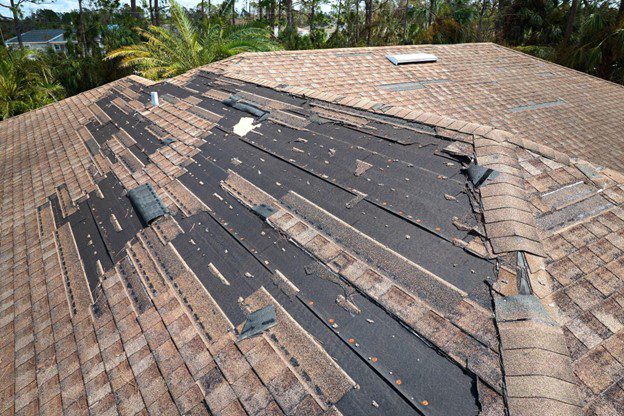
Hurricane season is not the time to discover your roof has a problem. In St. Johns County, strong winds, heavy rain, and wind-driven debris can turn a small roofing issue into major damage fast. A few missing shingles, a minor leak, or failing flashing may not seem urgent on a clear day, but those weak spots can quickly lead to costly repairs once summer storms roll in. That is why scheduling a roof inspection in St. Augustine before hurricane season is one of the smartest steps homeowners can take. Catching early warning signs of roof damage can help you avoid interior water damage, structural issues, and emergency roof repair in St. Johns County, FL when severe weather hits. Here are five common signs your roof may need repair before hurricane season in Florida.
Signs You Need Roof Repair in St. Johns County, FL
Spotting early signs of roof damage is one of the best ways to protect your home and avoid more costly repairs later. Issues like missing shingles, water damage stains, and damaged flashing may seem minor at first, but they can quickly become bigger problems, especially during Florida’s storm season. Knowing what to look for can help you address roofing issues early and keep your home safe, dry, and better prepared. Here are five signs your roof may need repair.
1. Missing, Loose, or Damaged Shingles
Shingles are one of your roof’s first layers of protection against rain, wind, and Florida climate. When shingles are cracked, curling, loose, or missing altogether, your roof becomes much more vulnerable to leaks and storm damage.
In Florida, high winds can easily get underneath weakened shingles and tear them away, exposing the underlayment and roof deck below. Once that happens, water can enter your home much more easily.
Look for:
- Bare spots on the roof
- Curled or lifted shingle edges
- Cracked or broken shingles
- Shingles on the ground after a storm
Even a small area of roofing damage is worth addressing before hurricane season gets underway.
2. Water Stains on Ceilings or Walls
Water stains inside your home often point to a roof leak, even if the leak seems minor at first. Brown spots, bubbling paint, peeling drywall, or discoloration on ceilings and walls can all be signs that moisture is getting in.
Roof leaks rarely improve on their own. In fact, they usually spread. What starts as a small drip can lead to damaged insulation, mold growth, wood rot, and more expensive repairs later on.
Common signs include:
- Yellow or brown ceiling stains
- Peeling paint near the ceiling
- Damp spots in the attic
- Musty smells after rain
If you notice interior signs of water damage, it is a good idea to schedule a professional roof inspection as soon as possible.
3. Damaged or Failing Flashing
Flashing is the material installed around roof penetrations and transition points, such as chimneys, vents, skylights, valleys, and where roof planes meet walls. Its job is to keep water from slipping into vulnerable seams.
If flashing is cracked, rusted, loose, or pulling away, water can enter around those openings during heavy rain. This kind of damage is especially risky during hurricane season, when wind-driven rain can force water into even small gaps.
Watch for:
- Cracked sealant around flashing
- Rusted metal flashing
- Loose sections around vents or chimneys
- Water stains near fireplaces or vent openings
Flashing problems are easy to overlook from the ground, but they are a common cause of roof leaks in Florida homes.
4. A Sagging Area on the Roof
A sagging roofline or soft spot in the roof deck is a more serious warning sign. It can indicate trapped moisture, rotted decking, or structural weakening beneath the surface.
If part of your roof appears uneven or droops in one section, do not wait to have it inspected. A sagging area may worsen under the pressure of heavy rain, pooled water damage, or strong wind.
This could be caused by:
- Long-term water intrusion
- Deteriorated roof decking
- Excess debris buildup
- Structural damage beneath the roofing system
A sagging roof is not just a cosmetic issue. It is often a sign that repairs are needed quickly to avoid larger structural problems.
5. Shingle Granules Collecting in Gutters
If you are seeing a buildup of granules in your gutters or downspouts, your shingles may be wearing out.
Those granules are the protective outer layer that helps shield shingles from sun exposure, weather, and general wear. As asphalt shingles age, they begin to shed granules. Some loss is normal over time, but excessive buildup can be a sign your roof is deteriorating.
Pay attention to:
- Sand-like material in gutters
- Bald-looking shingles
- Uneven color on your roof
- Older shingles with visible wear
Granule loss can reduce your roof’s ability to stand up to Florida’s heat, rain, and storms, which makes pre-season repairs even more important.

Why a Roof Inspection Matters Before Hurricane Season
Not all roof damage is obvious from the ground. Some of the most important warning signs, like lifted shingles, flashing issues, or soft decking, can be hard to spot without a closer look.
A professional roof inspection can help identify small problems before they become major storm-related damage. It also gives homeowners a clearer picture of their roof’s condition heading into hurricane season.
A thorough inspection may reveal:
- Storm damage you did not notice
- Early signs of leaks
- Failing flashing or sealant
- Wear around vents, valleys, and roof edges
- Issues that could affect insurance claims or future repairs
For homeowners in St. Augustine and across St. Johns County, scheduling an inspection before peak storm season is one of the smartest preventive steps you can take.
What to Do If You Notice These Signs
If your roof is showing any of these warning signs, it is best to act sooner rather than later. Waiting can allow water intrusion and structural damage to spread, especially once summer storms begin.
Here is what to do next:
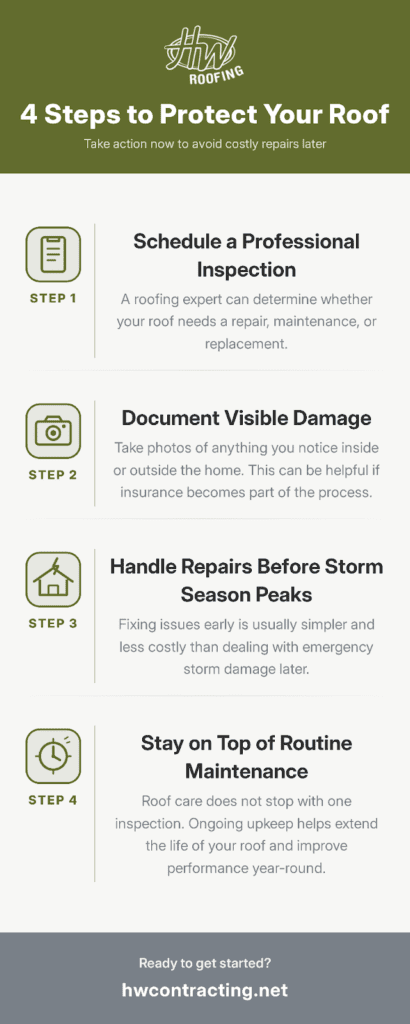
- Schedule a professional inspection. A roofing expert can determine whether your roof needs a repair, maintenance, or replacement.
- Document visible damage. Take photos of anything you notice inside or outside the home. This can be helpful if insurance becomes part of the process.
- Handle repairs before storm season peaks. Fixing issues early is usually simpler and less costly than dealing with emergency storm damage later.
- Stay on top of routine maintenance. Roof care does not stop with one inspection. Ongoing upkeep helps extend the life of your roof and improve performance year-round.
Extra Steps to Prepare Your Roof for Hurricane Season
Along with repairs, a few simple maintenance tasks can help your roof perform better during severe weather:
- Trim back overhanging tree branches
- Clear leaves and debris from gutters and roof valleys
- Check for loose soffits, fascia, or drip edge
- Secure outdoor items that could become airborne
- Review your homeowner’s insurance coverage
These steps do not replace roof repairs, but they do help reduce your risk during hurricane season.
Protect Your Home Before the Next Storm
Your roof plays a major role in protecting your home during hurricane season. If you have noticed missing shingles, water stains, failing flashing, sagging areas, or granules in your gutters, now is the time to have it checked.
Taking care of roof problems early can help you avoid expensive roof costs later and give you more confidence heading into storm season.
HW Roofing provides roof inspections and roof repair services for homeowners in St. Johns County and surrounding areas. If you think your roof may need attention before hurricane season, schedule a free inspection and address problems before the next major storm arrives.